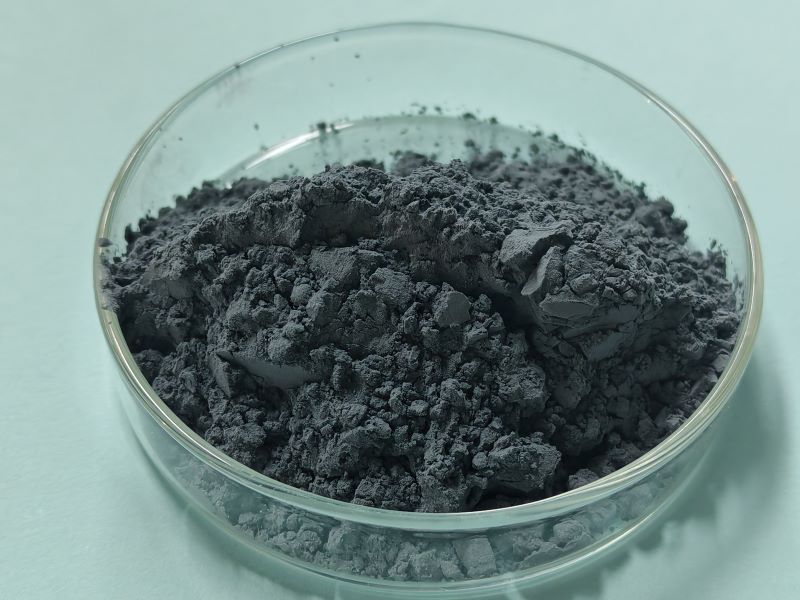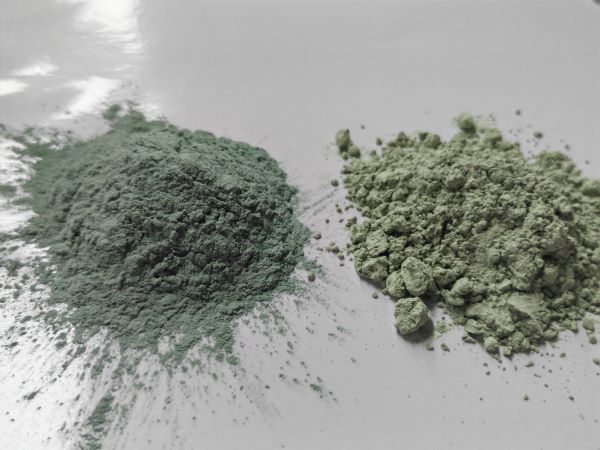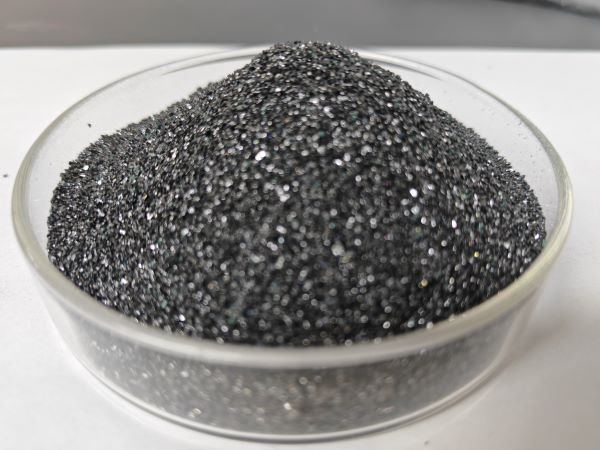

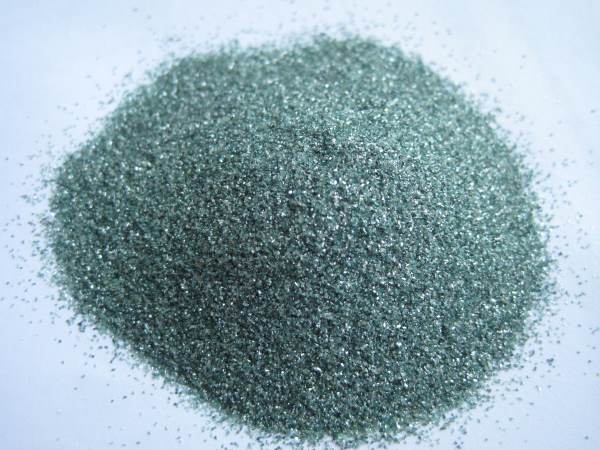
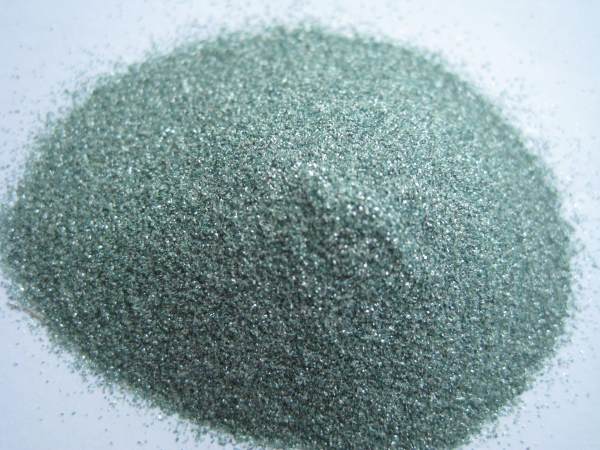
F90 F100 green silicon carbide for high-performance carbon/carbon composite materials
F90 F100 green silicon carbide for high-performance carbon/carbon composite materials is an extremely hard (Knoop 2600 or Mohs 9.4) man made mineral that possesses high thermal conductivity (100 W/m-K). It also has high strength at elevated temperatures (at 1000°C, Green SiC is 7.5 times stronger than Al2O3). Green SiC has a modulus of elasticity of 410 GPa, with no decrease in strength up to 1600°C, and it does not melt at normal pressures but instead dissociates at 2815.5°C.
PHYSICAL PROPERTIES
| Specific Weight | 3.95 g/ cm3 |
| Mohs Hardness | 9.5 |
| Maximum service temperature | 1900℃ |
| Melting Point | 2250℃ |
TYPICAL CHEMICAL ANALISIS [%]
| SiC | Fe2O3 | F.C | F.Si | SiO2 | LOI |
| ≥99.0 | ≤0.10 | ≤0.20 | ≤0.20 | ≤0.50 | < 0.05 |
Green SiC offer decisive advantages:
Efficient Machining & Grinding: Their extreme hardness allows for effective shaping, grinding, and machining of the notoriously tough C/C composites, reducing processing time and tool wear.
Enhanced Surface Integrity: The sharp grains produce clean cuts with minimal subsurface damage, which is crucial for maintaining the structural integrity and fatigue resistance of the final composite component.
Superior Thermal & Chemical Resistance: SiC retains its strength and cutting ability at elevated temperatures, making it suitable for processes involving heat. It is also inert, preventing unwanted chemical reactions with the carbon matrix.
Consistent Performance: Our rigorous production and grading processes ensure batch-to-batch consistency in particle size, shape, and purity. This reliability is essential for repeatable, high-quality manufacturing outcomes, ensuring every C/C composite part meets stringent specifications.
Mainly Applications
-Bonded Abrasives and Coated abrasives
-Blasting,surface Treatment,Rust Removal
-Wet and dry blast media,grinding and polishing etc
-Floor/Wall laminates,Wear-resistant
-Ceramic products: Ceramic and Tiles,Ceramic filter plate,ceramic membrane etc
-Teflon painting etc
– Heat insulating material
-Grinding wheels,Cup wheels,Whetstone,polishing pads etc
-Used for crucibles, parts for kiln burning, mechanical seals, and parts materials to produce semiconductors