Applications of Green Silicon Carbide in Wear-Resistant Coatings
Introduction
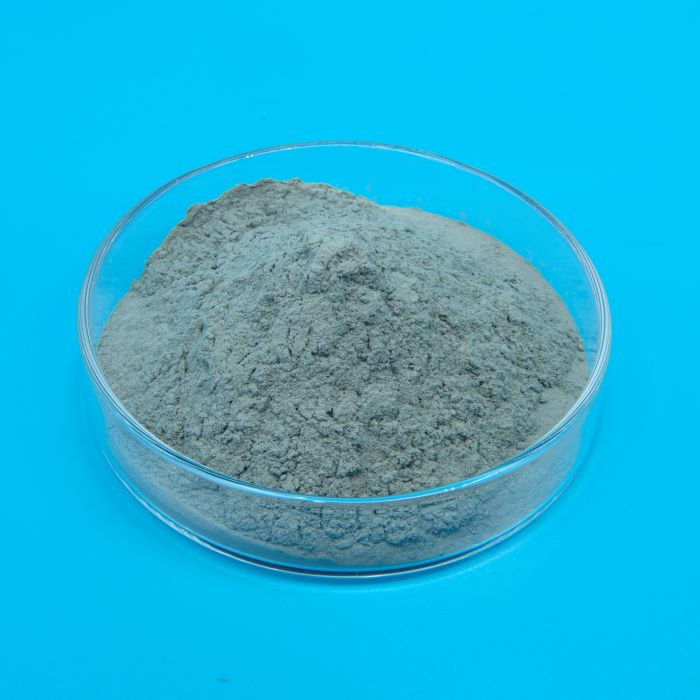
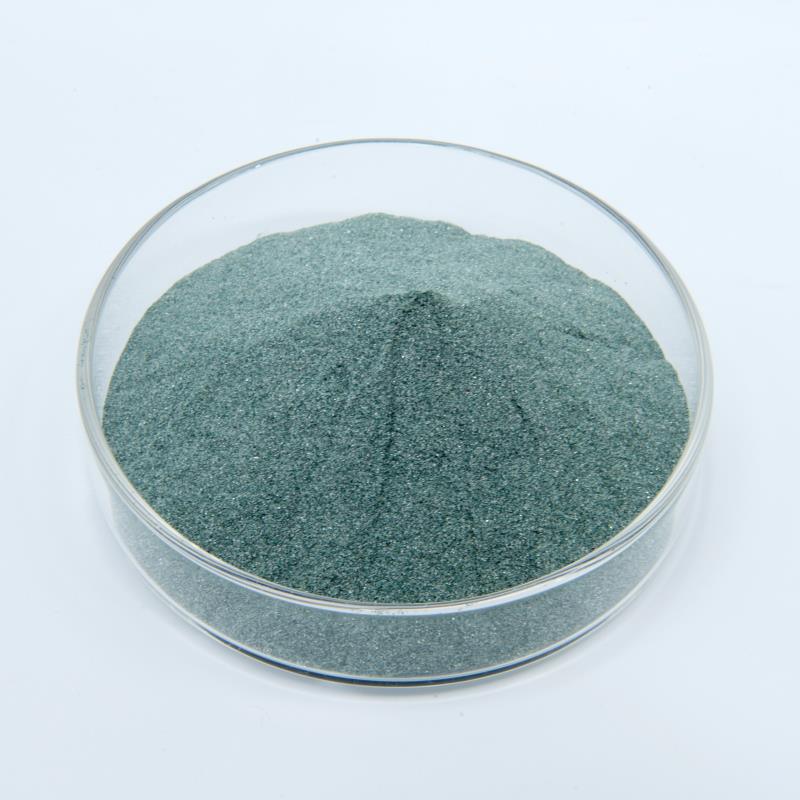
Green silicon carbide (SiC) is a high-performance functional filler renowned for its exceptional hardness, thermal conductivity, and chemical stability. With a Mohs hardness rating of 9.2-9.5—second only to diamond—and a Vickers hardness of 3100-3400 kg/mm², green silicon carbide has become an indispensable component in high-performance wear-resistant coatings across various industries.
1. Significantly Enhancing Wear Resistance
As a hard filler, green silicon carbide forms a robust skeletal structure within the coating matrix, dramatically improving abrasion resistance. Its irregular, angular particle shape effectively resists scratching, impact, and mechanical wear. Application data demonstrates that epoxy coatings containing 15% green silicon carbide exhibit over 40% higher wear resistance compared to conventional filler systems. In non-stick cookware coatings, the addition of green silicon carbide enables wear test cycles to exceed 5,000 cycles, meeting stringent quality standards.
2. Improving Corrosion Resistance
Green silicon carbide is chemically inert, offering excellent resistance to acids, alkalis, and corrosive media. When uniformly dispersed in the coating, the particles fill micro-pores and defects in the resin matrix, creating a dense physical barrier that effectively blocks water, oxygen, and chloride ions from reaching the metal substrate. Test results show that epoxy coatings loaded with 20% green silicon carbide can withstand immersion in 5% sulfuric acid for over 1,000 hours without blistering or delamination, whereas unmodified coatings typically fail within 300-500 hours.
3. Enhancing High-Temperature Performance
With a melting point of 2600°C and the ability to maintain structural integrity at temperatures exceeding 1600°C, green silicon carbide is ideal for high-temperature applications. At elevated temperatures, it forms a protective silicon dioxide (SiO₂) layer on its surface, further preventing oxidation. This makes it an excellent filler for high-temperature equipment coatings such as boiler tubes, exhaust manifolds, and industrial furnaces, where preventing coating cracking or deformation is critical.
4. Improving Thermal Conductivity
Green silicon carbide boasts an impressive thermal conductivity of 320 W/m·K, approximately three times that of copper. When incorporated into thermal dissipation coatings, it establishes an efficient heat transfer network that rapidly conducts heat away from critical components. In applications such as LED lighting heat sink coatings and 5G base station power amplifier coatings, adding 20% green silicon carbide microspheres can increase coating thermal conductivity by nearly threefold, reducing equipment operating temperatures by 8-10°C.
5. Strengthening Adhesion and Mechanical Properties
The angular morphology of green silicon carbide particles enhances “mechanical interlocking” between the coating and substrate, significantly improving adhesion strength. Additionally, the inherent strength and toughness of the particles contribute to increased compressive and impact resistance, reducing the risk of coating damage under mechanical stress—a critical factor in structural coatings for buildings and bridge protection coatings.
6. Providing Anti-Slip Properties
The rough surface texture of green silicon carbide particles increases the coefficient of friction when added to coatings. In applications such as floor coatings, ship deck coatings, and stair anti-slip coatings, green silicon carbide effectively enhances slip resistance, reducing the risk of accidents in both industrial and commercial environments.
7. Enhancing UV Resistance
Green silicon carbide exhibits high reflectivity and absorption of ultraviolet radiation. When incorporated into exterior coatings—such as architectural facade paints and automotive coatings—it enhances UV resistance, preventing premature aging, chalking, and fading caused by prolonged sun exposure.
Key Application Scenarios
| Application Area | Specific Uses | Key Benefits |
|---|---|---|
| Industrial Flooring | Warehouse floors, chemical plant coatings | Wear resistance, forklift durability |
| Non-Stick Cookware | PTFE/ceramic non-stick coatings | Scratch resistance, metal-free |
| Marine Engineering | Ship decks, offshore platform coatings | Salt spray resistance, anti-slip |
| High-Temperature Equipment | Boiler tubes, exhaust pipes, industrial furnaces | Thermal stability, oxidation resistance |
| Electronics Cooling | LED heat sinks, 5G base station coatings | High thermal conductivity |
| Chemical Equipment | Reactor vessels, storage tanks, pipelines | Acid/alkali resistance |
| Architectural Coatings | Exterior walls, bridge protection | Weather resistance, UV protection |
Particle Size Selection
Choosing the appropriate particle size is critical for achieving optimal coating performance:
| Particle Size Range | Application | Characteristics |
|---|---|---|
| 1-5 μm | Thin coatings, high-gloss finishes, thermal coatings | Dense, smooth surface |
| 5-15 μm | General anti-corrosion coatings, non-stick coatings | Balanced wear and finish |
| 15-50 μm | Thick-film floor coatings, heavy-duty coatings | Superior wear resistance |
| 50-100 μm | High-wear environments, anti-slip coatings | High roughness, excellent slip resistance |
Recommended Addition Level: Typically 5%-30% of total coating solids, with an optimal range of 15%-25%, depending on resin system and performance requirements.
Application Considerations
Surface Modification: Green silicon carbide particles are hydrophilic, while most coating resins are hydrophobic. Silane coupling agents are often employed to enhance compatibility and dispersion.
Dispersion Process: High-speed dispersion, three-roll milling, or ball milling is recommended to ensure uniform particle distribution and prevent agglomeration.
Purity Requirements: For food-contact applications such as non-stick cookware, heavy metal content must be strictly controlled (e.g., hexavalent chromium <0.01 ppm).
Conclusion
Green silicon carbide plays a vital role in wear-resistant coatings due to its unique combination of high hardness, excellent thermal conductivity, chemical stability, and high-temperature resistance. From industrial flooring and non-stick cookware to marine engineering and electronics cooling, it has become an indispensable functional filler in high-performance coating formulations. As industry demands for coating durability and performance continue to rise, the application prospects for green silicon carbide in wear-resistant coatings remain exceptionally promising.